With Earth Day just around the corner, I did another dramatic reading, this time of another of my favorite anonymous creepypastas: “Return to the Earth.”
Original story can be found here.
Photograph by me. See more on Instagram!
–
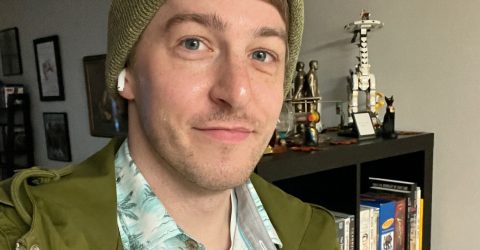

It’s just a scary story… what’s the worst that could happen?
Happy Halloween! It’s been a busier one than most for me–in-between prepping for tests, essays, and moot court competitions, I’ve scare-cly found time to even carve a Jack-o-Lantern since… ever? Now there’s a frightening thought!
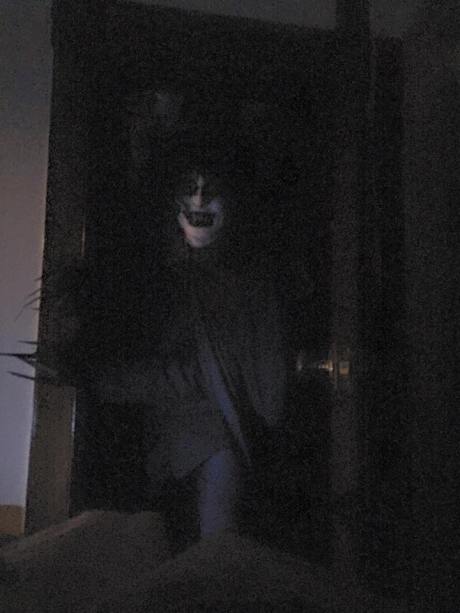
Yet I still managed to utilize Spirit Halloween‘s generous two-day shipping discounts to assemble a costume. My choice: The Babadook, titular bogeyman of the 2014 Australian sleeper-hit horror flick (now streaming on Netflix!). The most critical element–stage makeup–couldn’t be ferried by plane for some probably-TSA-related reason (are the terrorists just raring to smuggle powdered explosives in canisters of Chaplin-esque grease paint?), but fortunately the local Spirit branch at Ithaca Mall pulled through. Add some black construction paper, and there you have it–instant nightmares:
But onto the main attraction: As customary, I aim to provide a scary story every year for Halloween, even if it’s a matter of hours before November. Since the last story I even wrote was 2014’s Halloween tale (“Pruritus“), I felt especially compelled to produce one for 2015–come hell, high water, or lesser academic obligations.
As such, I present another Nightmare Force “Case File.” When we last checked in with the Nightmare Force, they were (spoiler alert!) busting a child-snatching interdimensional parasite that took up residence in one of Cardinal University’s computer labs. In this installment, we learn a bit more about how they live and interact when they’re on–and off–the job. Where do “DEMONS” come from, and how can any human weapons stop them? What shocking secrets and talents does the rest of Aron’s team have? And just who really leads the Nightmare Force, and keeps their missions under wraps?
It all starts to reveal itself on Halloween night, when a sinister spirit comes calling on one average college kid who read the wrong email…
Guns. Ghosts. Gore. Graphics cards. Time to delete some evil.
– – –
[Source for the original creepypasta of La Muerta Blanca by someone else. In the world of Nightmare Force, the idea is that this story already exists online, though I tried to put a new twist on it for this adaptation. Also, I am the polar opposite of Angela and Rip when it comes to crunching numbers–you’ll know when I probably screwed up, but hopefully the scene’s purpose in the plot will still make sense.]

“Ben Drowned” fan “art.” I got bored once.
Happy March! So things have been picking up in the last few weeks, relatively speaking: I’m a Managing Editor on the Cornell Law Review now, I got a part-time Spring internship offer from a local firm helping represent protesters in the fight to keep petrol storage out of Seneca Lake, and I’m in talks with a Ph.D from the Global Catastrophic Risk Institute to possibly do some research and legal writing on proposed international legal regulations for handling emergent AI in an increasingly internet-dependent world. That, and the snow’s starting to melt around here in Ithaca!
All told, though, that means I’m definitely pretty busy, so I’ll cut to the chase: in the spirit of not having inordinately large update gaps on this purportedly professional portfolio-ish blog anymore–as well as throwing a quick bone to the “on Wednesdays we wear pink”-esque trend that is #ThrowbackThursday–I present to you my thesis paper from my senior year in the University of Washington‘s Honors English program, circa 2013.
Consummate geek that I was/am, while others were analyzing T.S. Eliot or non-heteronormative narratives in Latin American fiction, I wrote about… creepypasta. Well, not just creepypasta–I dove into how the modern internet has allowed the time-honored ritual of collaborative fiction to partner with interactive fiction as well, particularly in the case of the bite-sized “this really happened!” horror stories we all know and love to read in minimal lighting. I explain how The SCP Foundation, Slender Man, and “Ben Drowned” each utilize(d) wikis and/or social media in similar but unique ways to present engaging, believable horror stories, then briefly discuss where and why Hollywood has succeeded or failed to capture this magic for “mainstream” appeal with films like Cloverfield and The Devil Inside.
So draw the shades, open a couple more browser windows, microwave a s’more if you want, and follow along as I analyze the thrills and chills of sitting down in front of…
The Digital Campfire
Interactive Horror Storytelling and Web 2.0
[A brief “P.S”: I initially considered shopping this around to relevant academic journals after I wrote it, but the plan got away from me and before I knew it I was writing legal notes instead! Part of me thinks this piece is best at home free on the internet anyway, like its subject matter; I have no idea whether putting it on my dinky WordPress blog puts me out of the running for a print journal picking up a variation on it some day, but at this point I just want to share the work and see what you folks think. With that “time capsule” quality in mind (and like I said, #TBT), I’ve done very minimal editing–mainly just new spaces between sections for clarity and a few egregious typos fixed, including the time I spelled “Doctor Who” as “Dr. Who.” As such, some details will be a tad outdated–most prominently, Marble Hornets finally wrapped up (with a polarizing ending), and I’m psyched for the SCP Foundation movie!]
As promised the other day, here’s a brief list of the “classes” of DEMONs that Aron and company may confront in the Nightmare Force series:
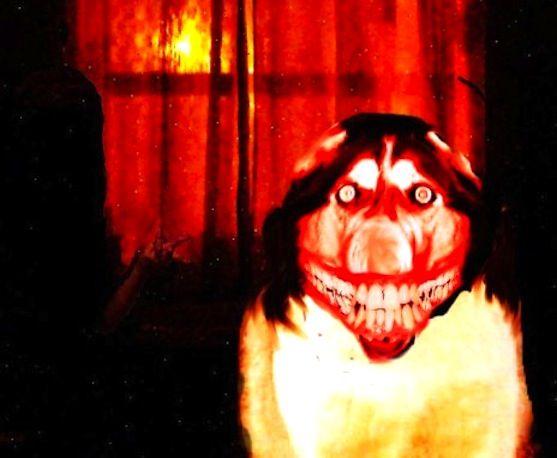
1: Photographers
Denotes a DEMON which takes the form of or “inhabits” a computerized image file. Visual exposure to a Photographer has been known to cause paranoia, sleep disorders (i.e. night terrors), and insanity, sometimes culminating in death by remote means or a manifestation. The image may be of the DEMON’s eventual manifestation, but it may just as easily be of some other disturbing or innocuous subject. In the case of preexisting images uploaded to an electronic network, those of a psychologically disturbing nature are prime targets, as DEMONs across classes primarily feed on the electrochemical energy generated by the human emotions of fear and anxiety.

2: Animators
Animators take the form of nonexistent episodes of animated television programs or films. Variations of preexisting animated footage are possible as well — and all the more dangerous, as the DEMON’s influence may not be readily apparent. The episodes will invariably be a disturbing or surreal deviation from the source material, portraying graphic and tonally perverse events, often via imagery that could not exist within the confines of the source program’s real-world creation. Although Animators are not as dangerous upon visual contact as Photographers, they have been known to change based on who views them — even among multiple simultaneous individuals — and produce unique effects capable of inducing despondency, violent behavior, or catatonia.
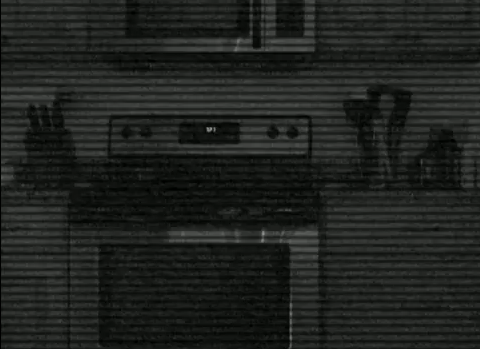
3: Directors
Essentially identical in characteristics and effects to Animators, with the exception that their footage consists of live-action people and places. However, the “works” of Directors can still take the form of either polished film or crude “found footage.” As with Photographers, some are legitimate recordings of a DEMON which facilitates its propagation by digital means, while others are created wholly by the Director. Differentiation between the two varieties — as well as what is merely legitimately disturbing footage unrelated to DEMONS — is an inherent challenge.

4: Programmers
Programmers target videogames, computer games, and other programs in general. Like Animators and Photographers, they may infect a preexisting game or create their own (albeit in purely digital form) through which to spread detrimental effects. However, this change can range from a slight modification of key features to — in the case of narrative-driven games — a total overhaul of the plot and characters. The challenge in tracking Programmers is that lesser interferences are often dismissed as “glitches” or “hacks,” while Programmers have been known to transcend their confines and infect other technology.
5: Authors
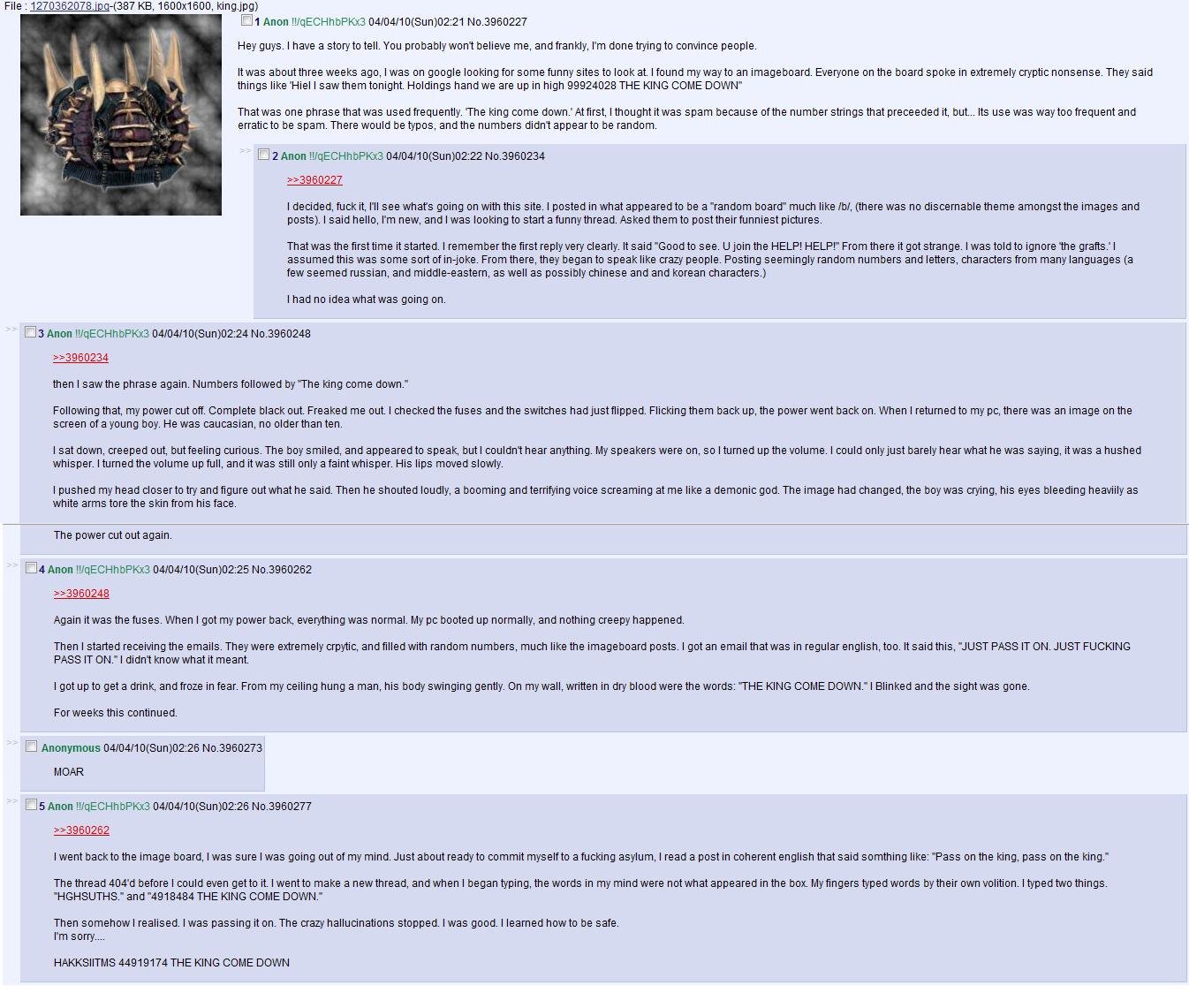
Though relatively uncommon, Authors are perhaps the most dangerous of DEMONs. They manifest in the form of text, which can quite literally go viral when distributed over the internet or — if the Author threatens or somehow possesses its victim — surreptitiously left in public on a digital device or storage medium. The “writing” can range from a complex story to a short warning to a jumble of nonsensical characters. In any case, by tracking the ocular movements and brain waves of its victim, an Author is almost guaranteed to manifest or in some way further spread after its victim has completed reading. Authors may manifest immediately or after a set period of times, though performance of a particular ritual may delay the event or transfer it to another victim.

6: Singers
The rarest of DEMONs, Singers choose to spread via digital audio files. These “Songs” are generally unnerving atonal pieces or cacophonous snippets of noise, though preexisting recordings of a disturbing nature are naturally a prime target for DEMONs if transferred to a computerized format. Listening to some or all of a Singer has been known to result in flu-like symptoms at the least, and psychotic breakdowns or manifestation (immediate or delayed) at the worst.
[Click through for edit source]
“Virus” refers to any DEMON which does not fit into the above categories. Because of their unpredictability, Viruses are assumed to be especially dangerous. Viruses may be reclassified at any time, and so the term can actually denote any unidentified DEMON.
[In “A Routine Tune-Up,” though Aron doesn’t explicitly mention it, Graytongue would be considered a Programmer, although its particular use of creepspace and “nesting” in a separate real-world location was unique enough to consider it a “partial Virus”]
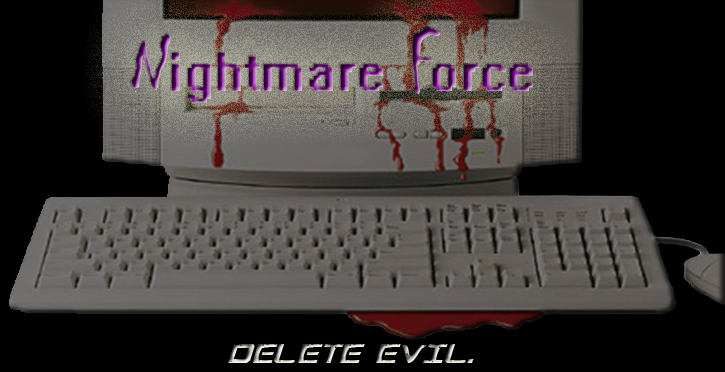
Happy almost-summer! Since last posting, I’ve finished my first year of law school at Cornell, and I’m currently gearing up for studying international law at the Sorbonne in Paris starting next week. In the meantime, though, I’ve been tending to a smaller project I started when progress on my novel (There’s Something Wrong with the Neighbor’s Cat) got to feeling too daunting in the short term. That project: a short prequel/interquel to a very different novel: Nightmare Force.
Some background, because this is a vignette/”spec script” of sorts: Nightmare Force is intended to be a horror/sci-fi thriller loosely based on “Binary DNA” (by “K.I. Simpson,” I think) and a handful of other creepypasta. The main characters are a team of six Engineering grad students at the fictional Cardinal University in New England; by day, they are the school’s “NetFixerz” tech support group, but by dark they are the “Nightmare Force,” hunting monsters, ghosts, interdimensional beings, and other entities that interfere with our world via electronic technology. Picture a hi-tech combination of The Brothers Grimm and Inception — with imagery drawn equally from cyberpunk and surrealist artists like Zdzisław Beksiński — and you’re not far off.
The circumstances of where the Nightmare Force obtained their skills — as well as how they first met — are mysteries to be slowly revealed over the course of the series. However, while I always told myself I’d never pull a Richard Kelly and assume everybody understood the elaborate universe I created after only sharing a quarter of it, this story features terms and tools that–for the sake of pacing and chronology with the rest of the planned series–I didn’t feel comfortable providing an exposition dump for. As such, I’ve added brief character bios and a glossary below, as well as links to a few relevant songs I listened to while writing. Feel free to read them first to understand what’s going on (WARNING: SOME SPOILERS), or just jump right in and check it later as the mood suits you!
Either way, put on your gloves, secure all the exits, and make sure your screwdriver is good and sharp, because it’s time for…
#NightmareForce
– – –
Character Bios
– – –
Glossary
– – –
And finally, here’s some songs I like that capture the mood and themes of Nightmare Force:
 Notes&Sketches