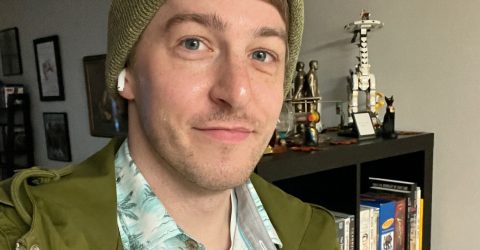
I went back home to Washington State for Spring Break, and… it didn’t feel like it used to. I’m still not sure if that’s a good or bad thing, but I thought I should “write it out.”
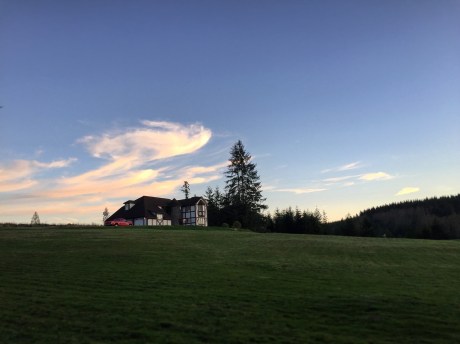
Home Less
People speak of haunted houses,
but never the reverse.
We mistake it at first, home,
for the cabinets, countertops, and plastic toys.
That’s, after all, as far as our goals go,
as far as nimble legs can carry us:
to the playground,
TV room,
town bar.
Postcards, plaques, and photographs
hold fast the roof we sleep beneath—
hoarded mortar to the bricks.
All the world’s a game, and
you must be this tall to exit.
But over years,
under fees, degrees, double-digit birthday cakes,
expectations asphyxiate—comparisons oppress.
The mind moves but loops, running
not a marathon but a track:
Even if you notice a new patch of grass,
it’s still a circle.
And one day, returning turns nothing at all.
Through the front door,
and the past piles on, quarterback-like:
Memories of memories, of thoughtless acts
and thoughts never acted on.
The gravel avenue, the green, greener grass
remain unchanged,
yet the mailbox peels, the Jeep rusts,
and the dusty halls shine quieter.
Mirthful or mournful,
you can’t go back.
Every room is an interrogation room,
wrecked by recollections, recursion of diversions.
The bed’s a confessional,
coaxing midnight doubts and dreams
from uncanny comfort.
Bookshelves elevate what once mattered:
Piggy banks, cracked glasses, collector’s editions uncashed.
Half-sketches, bookmarks bisecting paperbacks,
beg questions:
When does a to-do become a once-was?
When does an ambition become an anecdote?
Branch out enough, and the limb will snap
at the base.
So it scares me, like a trust fall in transit,
that with so much behind, I don’t know where I’m headed.
Not depressed but compressed, lifted up
and weighed down at once
by the prospect of prospects.
Sure, stability is a privilege,
with a cap on laments.
Still, it’s unrelenting, this discontent
when the contents of my mind
mirror the zip code of my former universe.
A false sense of insecurity must come from somewhere.
When the beginning of your world starts feeling like its end,
the lucid dream becomes sleep paralysis—
a vacation becomes tourism through history.
There’s no cure for maturity,
but there is a placebo.
Just know
home is not a place
but a space, a radius
orbiting wherever we go—
satellites of plans, passions, and aspirations.
Home is not a building
filled with odds and ends and quiet blind spots.
It is building:
A life, a wife, a gig, something big,
or at least bigger than you were
the day before.
And until I lay those bricks—
wrap those drafts, earn that office,
let a ring follow a call for once—
there’s no place to rest.
But I’m fine being home less.
–
 Notes&Sketches